
Biology, Conservation Biology - Master Programme
Start
Autumn 2026
Duration
2 years
Level
Master's
Language
English
Place of study
Lund
This programme provides you with global and regional perspectives on problems related to reduced biodiversity. You will learn about why certain species are threatened and how they can be saved from extinction, as well as gain understanding for how ecosystem functions and ecosystem services are related to biodiversity.
You will also learn how to use modern population ecology and genetics, in addition to various analytical methods within conservation biology. You will obtain concrete tools for managing and recreating natural ecosystems and for mapping the loss of species variety.
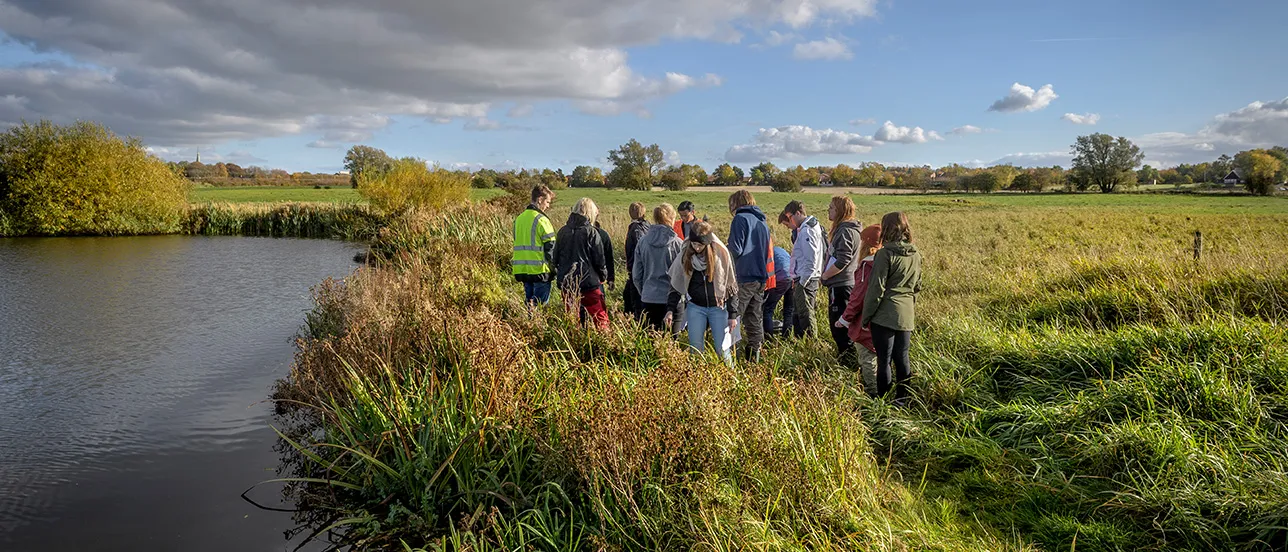
Excursions and field projects are included in many of the courses. Field instruction is an important part and is provided at no cost. Elective courses allow you to specialise in tracheophytes, mosses, larvae, fungi, birds or insects. The programme also provides you with specialised knowledge on experimental design and statistics, as well as training in analysing and interpreting biological data.
The programme has a high proportion of scheduled lessons, and the interaction with teaching staff is relaxed. All of the teaching staff are researchers, and the courses are continuously adapted based on current research. The Department of Biology has several world-leading research teams and conducts both basic research and applied research in, for example, conservation biology and ecosystem services.
Teaching takes place on modern premises and in laboratories with advanced equipment. You will practice both oral and written presentations and obtain ample experience in working in groups. The language of instruction is English, apart from individual elective courses on species knowledge. The programme has a recommended study route, but you can also make a personal study plan after consultation with the study advisor and programme coordinator.
You will initially take a course on population and community ecology, which also includes statistics and experimental design. Thereafter you can select courses on modelling and advanced statistics or animal ecology, for example. During the spring semester you will attend a compulsory course on specialised theory and modelling within nature conservation and conservation biology. You will also study more applied aspects of nature conservation during a course on either biological monitoring or water management.
During the programme you can also take courses on geographic information systems (GIS) or species identification, for example. The degree project is worth 30, 45 or 60 credits and is generally conducted in a research team, but it can also be conducted in cooperation with a public authority or a company. The Master’s programme offers the option of doing an internship, which can provide valuable contacts.
After graduation, you can work in nature conservation in both the public and private sectors, for example as a municipal ecologist, at county councils or as a consultant. The knowledge you obtain is also needed in silviculture and agriculture.
Among other things, your work duties could include environmental monitoring, taking species inventory, field sample collection, offering advice as well as assessing and implementing biodiversity measures. If you are interested in research within conservation biology, there are good opportunities to continue your studies at a higher education institution.
Prerequisites
Specialisations: Conservation Biology Bachelor’s degree of at least 180 credits, of which 90 credits must be in science, including 5 credits in statistics and 60 credits in biology comprising cell biology, genetics, microbiology, ecology, botany and zoology, or the equivalent. English course 6 (advanced proficiency)
Selection criteria
Based on grades awarded for previous academic courses, as well as a statement of purpose for the application and qualifications from research/work of relevance to the study programme (from the applicant’s “Summary sheet”).
Computers in the programme
The student must have access to a computer, preferably a laptop, on which you can install software mainly provided by the University, such as Microsoft 365, CAD/CAM and development environments for Python, Matlab or other computational tools. It can be either a Windows computer or a Macintosh computer. On some courses you may need to buy or rent your own software.
Conditions in the study environment and during study visits and field studies
The programme contains compulsory elements that require you to be able to work independently and safely in a laboratory environment, in a hospital environment, in workshops, in production facilities, or during study visits and field studies. These elements require the ability to comply with safety regulations, rules and instructions, and to move around in and evacuate premises safely.
Ethical concerns
The programme includes compulsory elements that some people may have concerns about, such as patient-centred activities in healthcare, animal testing or dissection. However, the student is obliged to acquire knowledge and skills in these areas as well, to the extent necessary to fulfil the learning outcomes of the course. For some elements, there might be specific requirements regarding rules on hygiene, protective work clothing, confidentiality and professionalism.
Tuition fees for non-EU/EEA citizens
Citizens of countries outside:
- The European Union (EU)
- The European Economic Area (EEA) and
- Switzerland
are required to pay tuition fees. You pay an instalment of the tuition fee in advance of each
semester.
Tuition fees, payments and exemptions
Full programme/course tuition fee: SEK 370,000
First payment: SEK 92,500
Note that you may also need to pay an application fee, or provide proof of exemption.
No tuition fees for citizens of the EU, EEA and Switzerland
There are no tuition fees for citizens of the European Union (EU), the European Economic Area (EEA) and Switzerland.
Lund University Global Scholarship Programme
The Lund University Global Scholarship programme is a merit-based and selective scholarship targeted at top academic students from countries outside the EU/EEA.
Lund University Global Scholarship
African Research Universities Alliance (ARUA) Scholarship
Within the framework of the Lund University Global Scholarship programme, the University also offers the African Research Universities Alliance (ARUA) Scholarship targeted at top academic students from selected African research universities.
Swedish Institute Scholarship: Global professionals
The Swedish Institute offers scholarships to international students from certain countries who are applying for select Master's programmes in Sweden.
Scholarship information on the Swedish Institute website
Swedish Institute Scholarship: Pioneering Women in STEM Scholarship
The Swedish Institute offers scholarships for Master's studies in Sweden for women from selected countries in Africa and Asia who want to pursue degrees in STEM fields. Check the country and programme requirements on the Swedish Institute's website to see if you are eligible for the scholarship.
SI Scholarship Pioneering Women in STEM
Country-specific scholarships and funding options
Lund University has agreements with scholarship organisations and funding bodies in different countries, which may allow applicants to apply for funding or scholarships in their home countries for their studies at Lund University. Most agreements are intended for Master’s applicants, although certain opportunities may also be available to Bachelor’s students.
External scholarships
In addition to scholarships offered by Lund University or through its partner agreements, there are external opportunities. On the page below, you’ll find examples of organisations that may provide financial support for international students from specific countries.