
Cancer does not spread randomly throughout the body. The physical environment surrounding a tumour consists of a network of proteins and sugars known as the extracellular matrix. This environment plays an active role in determining whether and how cancer cells invade surrounding tissue. As tumours develop, the network becomes stiffer and less flexible, which is what feels like lumps in breast cancer, for example. Understanding how cells respond to these physical changes sits at the intersection of engineering, physics, and biomedicine — the core of the field known as mechanobiology.
How tissue stiffness drives cancer cell invasion
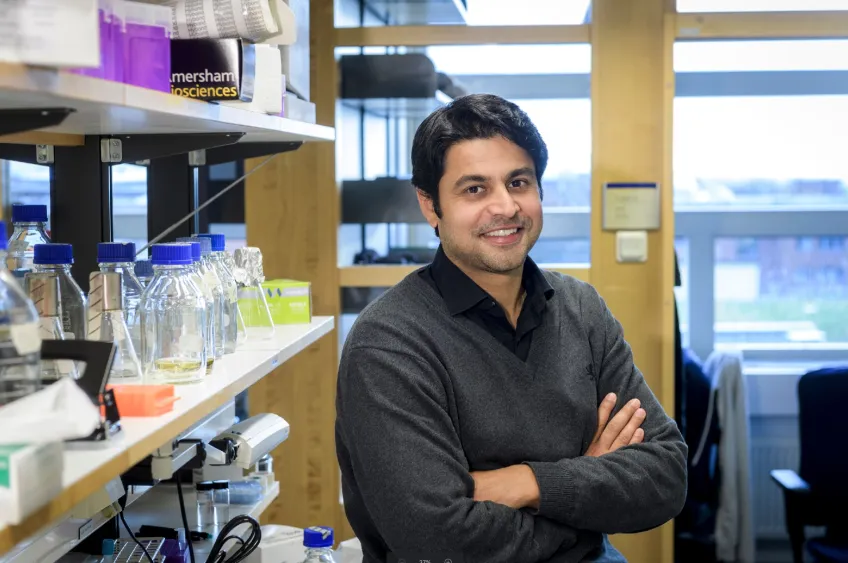
“It has long been suspected that physical changes in the tumour environment encourage cancer cells to become more aggressive. But the precise molecular mechanisms, and whether their effects persist once the physical stimulus is removed, have remained incompletely understood. These are the questions we sought to investigate,” says Vinay Swaminathan, senior lecturer at Lund University and head of the Cell Mechanobiology research group.
Both studies have been published in the journal *Advanced Science*. The first study investigated how increased stiffness in the tissue environment triggers the spread of cancer. In the laboratory, the research team developed a precise and controlled 3D model consisting of small clusters of breast tissue cells – designed to resemble normal breast tissue. The cells were cultured inside a gel whose stiffness could be adjusted precisely, without disturbing the cells themselves.
“Using this system, we discovered that as the surrounding tissue hardens, a specific chain of molecular events is set in motion,” explains associate researcher Kabilan Sakthivel, who led this study.
The researchers identified a chain of three proteins driving this process: β1 integrin on the cell surface activates the signalling protein FAK, which in turn activates Piezo1, a mechanosensitive ion channel. Together, these proteins cause cells to reshape and invade the surrounding tissue.
"Critically, when the tissue softened again after hardening, the invasion was reversed — suggesting that timing matters enormously. There appears to be a point of no return: intervene early enough, and the process can be wound back to normal. This makes the early mechanical changes in tumour tissue a potentially important therapeutic window," says Kabilan Sakthivel.
Lasting cellular memory and epigenetic reprogramming

The second study focused on fibroblasts — supporting cells that surround tumours and contribute to tissue stiffening. Prolonged exposure to a stiff environment caused these cells to permanently switch to an activated state promoting tumour growth, an effect that persisted even when cells were returned to a soft environment.
"This permanent change was not driven by genetic mutation, but by changes in how the cell's genetic information is physically organised within the nucleus — a process known as epigenetic reprogramming," says doctoral student Swathi Packirisamy, who led the second study.
The researchers identified two parallel molecular pathways behind this reprogramming, both converging on chromatin compaction that locks cells into an activated state. Blocking either pathway alone was sufficient to prevent the transition — and cells that had already been affected could be reset to their normal state.
“What excites me most is that this is fundamental biology — understanding how cells read and remember their physical environment at the molecular level. But because we can now identify specific points in this chain where the process can be intercepted or reversed, there is a real path from these basic discoveries toward new therapeutic strategies," says Vinay Swaminathan.