
How a cancer survivor developed a blood test that can change cancer care
As a teenage cancer patient, Lao Saal experienced firsthand how science can rewrite a life.
Years later at Lund University, he developed a blood test that can detect signs of cancer relapse far earlier than today’s clinical standards.
”I think teenage me would be really proud. That experience is always with me – it’s the entire reason why I became a researcher.”
The uncertainty after breast cancer treatment
For many patients treated for breast cancer, follow-up is marked by uncertainty. A mammogram may look normal and there may not be any alarming symptoms – and still, somewhere in the body, the disease may have returned.
For decades, that has been one of the difficult realities in breast cancer care. For cancer researcher Lao Saal, the question of earlier detection is personal. As a teenager, he was diagnosed with leukaemia and spent three years in a clinical trial at the U.S. National Institutes of Health. When he recovered, he could have chosen to leave the experience behind him. Instead, he did the opposite – immersing himself in the subject.
“I decided to talk to some of my doctors who had treated me and ask them about their research. They invited me to start working in the lab, and that's where I got hooked on the research“, Lao says.
The rest, as they say, is history.
The blood test that sees cancer coming
Later, research brought him to Sweden and Lund University – to an environment where breast cancer has been studied for decades. Here he also found one of the largest population studies of its kind, with data and material from some 23,000 breast cancer patients.
For researchers, being able to follow such large patient population is a goldmine, Lao says.
The extensive patient data generated both new insights and new questions. One of those questions stayed with Lao. Could a blood test detect breast cancer relapse before symptoms appear – and earlier than current methods allow?
It turned out to be possible.
The gap in follow-up
At a clinic in Waxahachie, south of Dallas, Texas, breast cancer chief surgeon Valerie Gorman has spent more than two decades following breast cancer patients.
"Historically we haven’t had a great blood test to follow breast cancer. We have lacked reliable blood markers that can tell us whether treatment is working or whether the disease has silently returned elsewhere in the body," Valerie says.
Instead, follow-up often relied on conversations and imaging. But mammograms cannot detect metastases in other parts of the body, such as the bones.
"You really haven’t had a great way to find that until somebody’s bones start hurting."
By then, the disease may already have progressed.
The eureka moment
Cancer cells are messy. As they grow, pieces of their DNA can break off and get stitched back together in the wrong order – almost like pages in a book being torn out and rearranged. These unusual DNA patterns, called chromosomal rearrangements, can act like unique fingerprints of a tumour. And since tumours are constantly “shedding” tiny bits of genetic material into our bloodstream, a simple blood sample – also known as “liquid biopsy“ – can be used as a window into what is happening with the tumour.
“Once me and my team had that sort of light-bulb moment, we realised we really should go after these chromosomal rearrangements”, Lao says.
And so the liquid biopsy test, a blood test called Pathlight, became a reality. Studies have shown that it is able to detect extremely small amounts of tumour DNA with very high accuracy and a very low rate of false positive results – identifying signs of relapse a median of 13.7 months earlier than conventional methods. In some patients, signs have been detected as much as three to four years earlier.
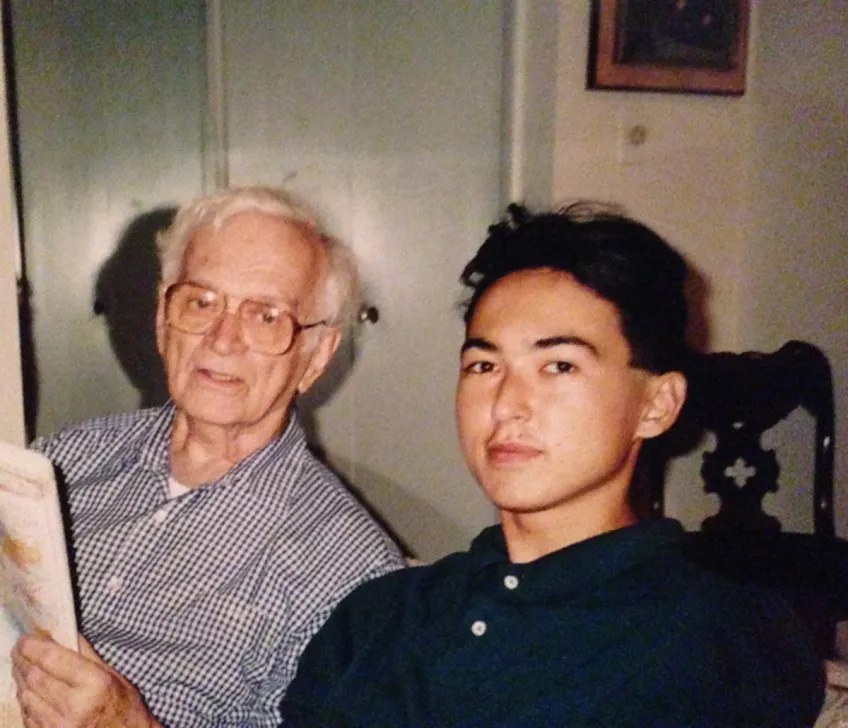
There have been moments when the research has felt very close. At times, we’ve been asked to analyse samples from young cancer patients – much like I once was, says Lao.
Reaching patients for the first time
The test has been launched in the U.S. for breast cancer and colon cancer. It received Medicaid coverage for breast cancer in May 2025, meaning it will be accessible to more people. Valerie Gorman’s team started using the liquid biopsy in October 2025, and the test has already helped to detect small metastases in women who had no symptoms at all.
We wouldn’t even have known to look for it otherwise, Valerie says.
The test gives a sense of prognosis – whether the patient is lower-risk or higher-risk – and data shows it can also provide a readout for how patients respond to treatment over time.
Staying one step ahead of cancer
Detecting recurrence earlier allows treatment to begin sooner. And it could eventually help identify which patients truly need more treatment, and which do not.
“Maybe we’ll learn that some patients don’t need all that chemotherapy,“ Valerie adds.
For many patients, the repeated testing has become emotionally significant.
“It’s almost a celebration when they get their zero,” she says.
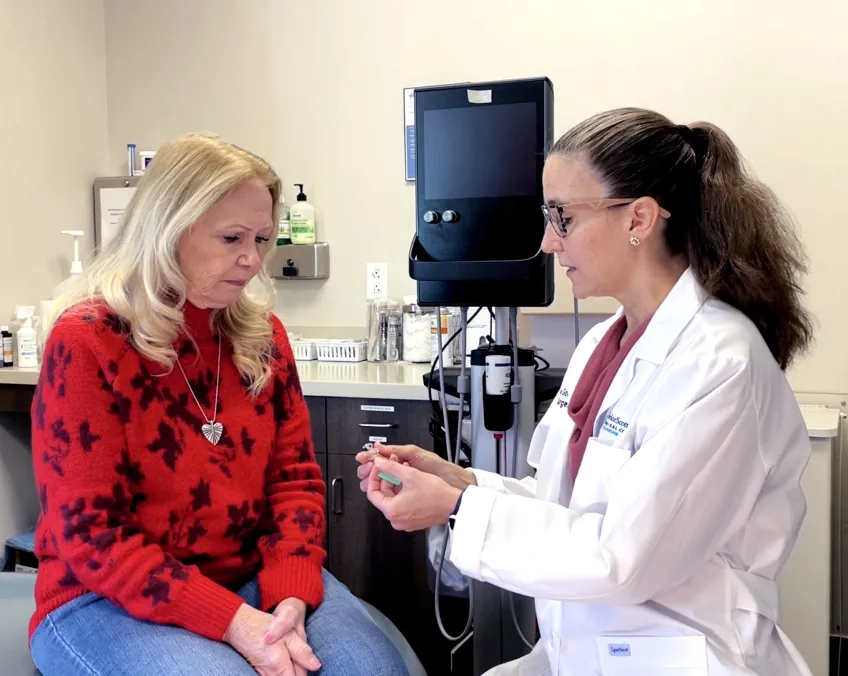
I think in the next ten years, there’s a real chance that most cancers will be monitored using some form of circulating tumour DNA test during treatment, Lao Saal says.
From discovery to patient care
Researchers in Lund are opening up new ways to find, understand and treat cancer – shaping clinical practice and inspiring new life science companies. Here are a few examples.

Seeing more with AI
Researchers at Lund University are exploring how AI can improve breast cancer care. The MASAI study (Mammography Screening with Artificial Intelligence) showed that AI-assisted screening detected more cancers; N23 Health combines portable ultrasound with AI; and the NILS project (Non-invasive Diagnostic of Lymph Node Status) predicts lymph node spread from mammography images – potentially reducing the need for axillary surgery.

Decoding the tumour
Clinicians can now understand cancer in greater detail thanks to Lund University research. The SCAN-B project (Sweden Cancerome Analysis Network – Breast) has analysed samples from more than 23,000 breast cancer patients to develop tests now used in clinical care. Blood-based biomarker research has also given rise to Immunovia and Reccan, two companies focused on early diagnosis of pancreatic cancer.
Arming the immune system
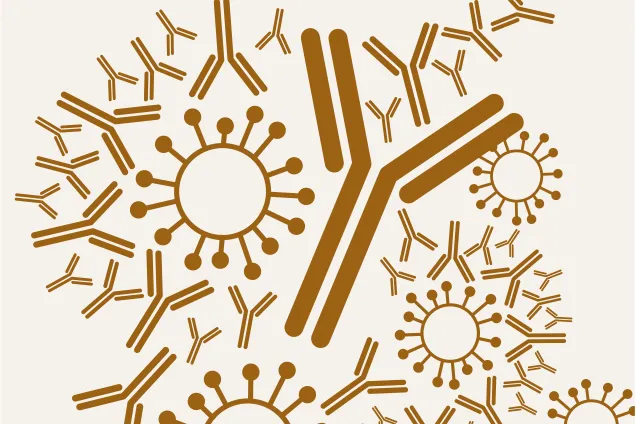
From antibodies to cell reprogramming, several Lund University spin-offs are opening new ways to treat cancer more precisely. Cantargia is testing antibody-based treatments in patients, Lead Biologics is developing antibodies designed to expose cancer cells to the immune system and Asgard Therapeutics is working on converting cancer cells into triggers for an immune response – a strategy that could make the tumour itself part of the cure.
The Lund business advantage
The idea might have stopped at a scientific publication, had it not been for innovation scouts from Lund University’s innovation office. One of them saw what Lao Saal’s lab was doing and encouraged him to explore patenting and company formation.
“If Johanna from LU Innovation hadn’t stopped by our office in 2014, this might have only remained a very nice publication – and no company. She more or less said: why don’t you try?”
That question changed the direction of his work. Two years later, in 2016, he founded SAGA Diagnostics with his PhD student Anthony George and LU Ventures, Lund University’s venture builder.
The early years were demanding.
Lao Saal and his colleagues had to learn how to build a company, and funding was hard to come by. The path to market appeared distant. And the biggest question of all – whether the technology would ever reach real patients – remained unanswered.
For years, we were working on it essentially for free. There were moments where I wondered if we would survive the next six months or not. But it was incredibly exciting, Lao Saal says.
Luckily, SAGA Diagnostics grew in the research and innovation environment around Medicon Village, at the heart of Lund Innovation District – where Lund University research groups, clinicians, startups and established companies work side by side.
“The proximity of people really make a difference. No one was competing directly, so people shared advice, contacts and experiences,“ Lao Saal says.
The next chapter
The journey shifted from proving the science to bringing the technology into clinical use. In spring 2026 came the announcement: Foundation Medicine Inc., part of Roche, would acquire SAGA Diagnostics.
“It’s a real validation of all the hard work, the ideas, and all the long nights and weekends that so many people have put in over the last decade,” he says. “Honestly, it still feels almost unbelievable.”
For Lao, the significance is not the size of the deal itself (despite being valued up to USD 595 million dollars) but what it could make possible.
What's most important is that the technology can now reach the greatest possible number of patients around the world. That was always the goal – to have a clinical impact.
What would seventeen-year-old Lao Saal, who was a cancer patient, think of this moment?
“I don’t actively go back and think about myself as a patient,” Lao says. “I went into this line of work to try to improve things for future cancer patients. But deep inside, I'm sure my personal experience is a big part of what pushes me forward."
Lund University: cancer research with global impact
What is Lund University’s role in cancer research?
Lund University has been a centre for cancer research for decades. Research is coordinated through Lund University Cancer Centre (LUCC) – in close collaboration with Skåne University Hospital. The university has particular strengths in cancer therapeutics and diagnostics; in pipeline technologies spanning the full journey from early discovery to clinical application, including advanced cell and gene therapies, antibody-based treatments, large-scale biobanks, and genomic analysis; and in translating research into clinical tools and new companies.
How does Lund University's cancer research reach patients?
Lund University has a strong track record of turning research into clinical and commercial impact. LU Innovation actively supported 21 cancer innovation projects in 2025 alone, helping researchers with IP strategy, company formation and pathways to market. SAGA Diagnostics is one example of a Lund University spin-off that has reached patients globally.
Who is Lao Saal?
Lao Saal is the Berta Kamprad Associate Professor at Lund University and founder of SAGA Diagnostics. His research on liquid biopsy – blood-based tests that analyse tumour DNA circulating in the bloodstream – led to the development of Pathlight, a test that can detect signs of cancer relapse far earlier than conventional methods. He holds both a PhD in molecular biology and an MD from Columbia University.
What is SAGA Diagnostics?
SAGA Diagnostics is a life science company founded in 2016 by Lao Saal and PhD student Anthony George, together with LU Ventures at Lund University. In spring 2026, the company was acquired by Foundation Medicine (Roche) in a deal valued at up to 595 million USD.
What is Pathlight?
Pathlight is a blood test developed by SAGA Diagnostics that detects signs of breast cancer recurrence earlier than conventional methods – a median of 13.7 months earlier. The test also helps identify which patients need more treatment and which do not, and is available for colon cancer as well.
Published: 10 June 2026
Last updated: 10 June 2026
Written by: Tove Smeds
Researched and produced by: Amanda Lindström, Catrin Jakobsson, Ellen Albertsdóttir, ellen [dot] albertsdottir [at] kommunikation [dot] lu [dot] se (ellen[dot]albertsdottir[at]kommunikation[dot]lu[dot]se)
Sources: Researchers Lao Saal and Peter M. Nilsson, and Roche
Photographs: Catrin Jakobsson, Lao Saal, Valerie Gorman, Kennet Ruona